
| The state of Section 8 |
| The federal government has provided rental assistance to low-income Americans since the 1937 US Housing Act, and the Department of Housing and Urban Development (HUD) now oversees eight different nationwide housing assistance programs. The latest data shows how many units the country has, who lives in them, and how long they must wait for one.About 8.86 million people, or 2.6% of the US population, lived in subsidized housing in 2025. On average, residents had lived in their units for 10 years and three months. |
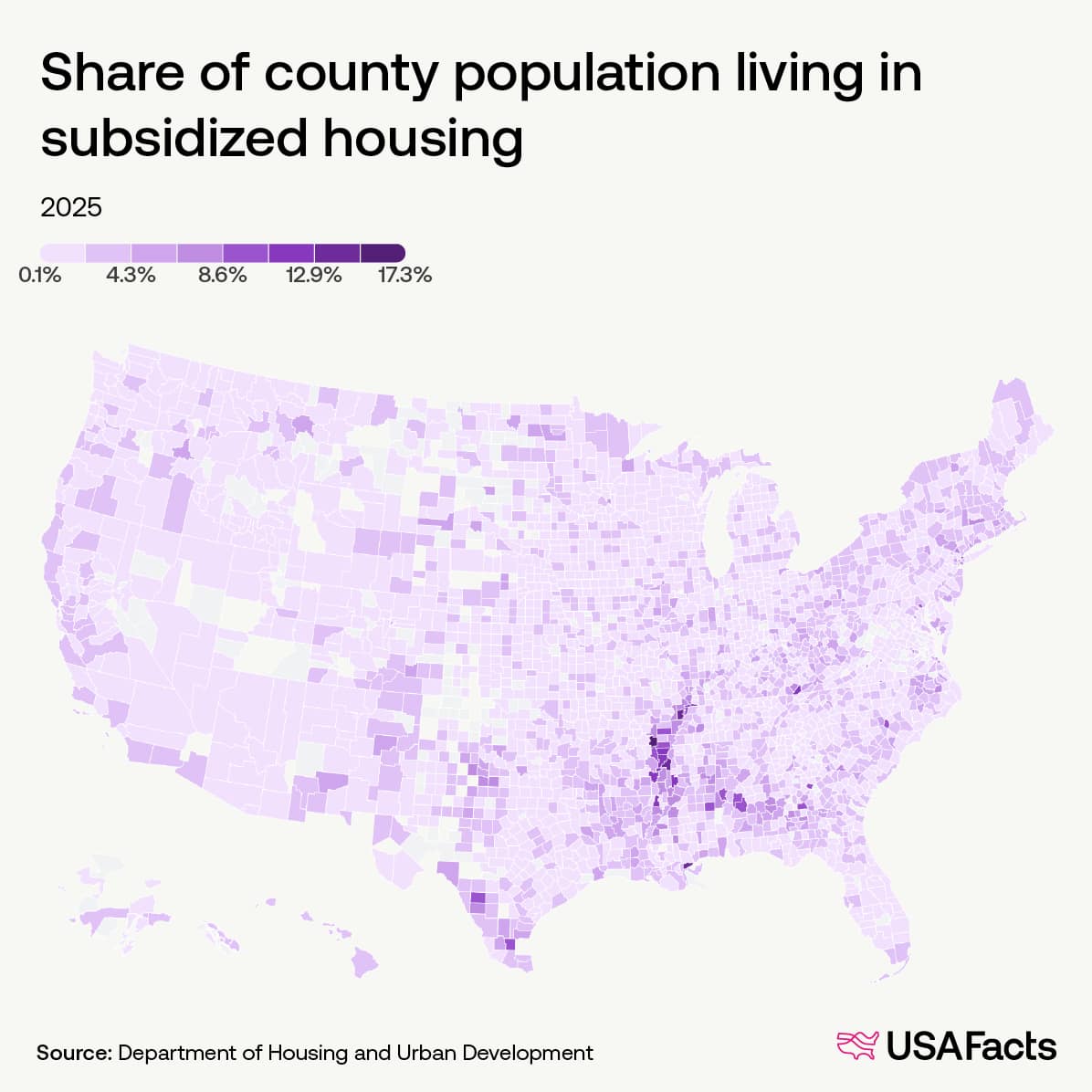
| The US had about 5.13 million subsidized housing units last year, and 667,000 (or 13%) of those units were unoccupied and available to rent. Tenant-based vouchers made up 55% of the subsidized housing stock. These vouchers allow recipients to choose their housing in the private market, provided it meets program requirements. Privately owned, multifamily developments accounted for 29% of subsidized housing. Public residential units, built and managed by local housing agencies for low-income families, older adults, and individuals with disabilities, accounted for 17%. Washington, DC, had the most subsidized housing per person in any part of the country (50 units per 1,000 people). Rhode Island had the most of any state (35 per 1,000). Arizona had the fewest (six per 1,000). HUD said 95% of households in subsidized housing had very low income in 2025 (measured as households with incomes that do not exceed 50% of median family income for the area), and 79% had extremely low income (those not exceeding the greater of 30% of the median family income for the area). The average household earned $18,483 annually. Women headed 74% of households in subsidized housing. Someone 62 or older headed 43%, and 67% were headed by someone belonging to a minority group. How many units are available in your state/county? How many people live in them? And how long is the wait to get in them? We have the local data to help you find out. |
